



Winter agricultural crops – what needs to be done in autumn
Updated: Sep 19, 2025
Every farm's goal is a bountiful and high-quality harvest. However, achieving this goal is no simple task, and the journey to good results begins with the sowing of winter crops. The critical developmental stages of winter plants start in the autumn, so it is particularly important to complete all necessary tasks properly from the very start of sowing.
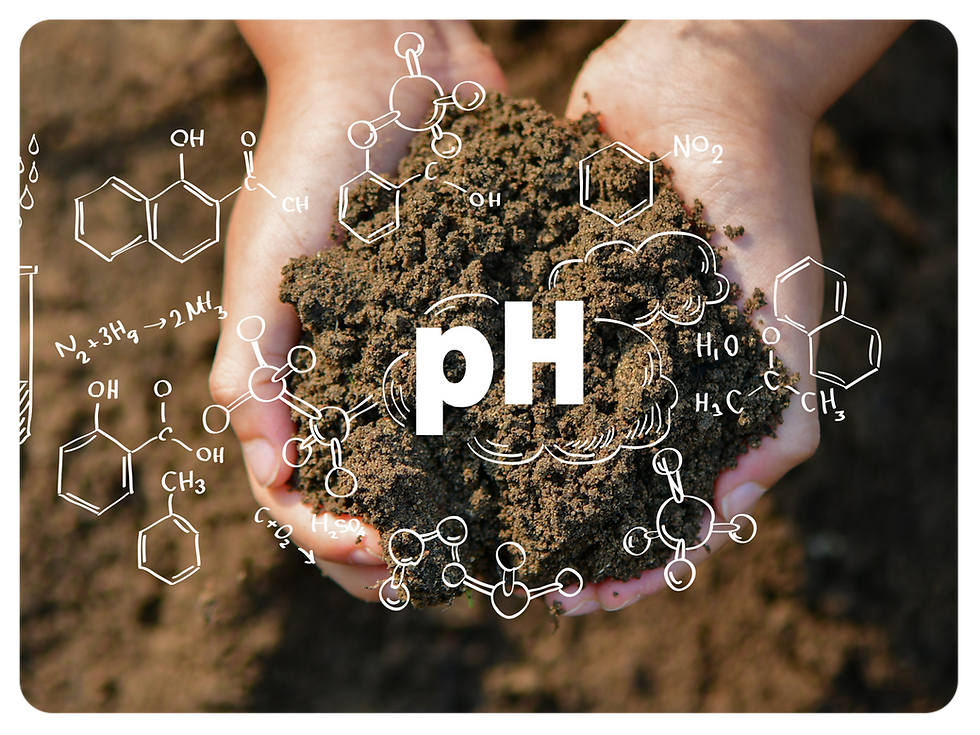
What is micro pH and why is it so important?
When discussing winter cereal crops and the nuances of early growth stages, it is essential to focus on what matters from the outset. First and foremost is the preparation of the soil and the seedbed. This involves not only proper soil preparation but also ensuring appropriate fertilization and micro pH.
Ensuring micro pH means achieving an optimal pH level around the seed or roots (the so-called rhizosphere) rather than just the overall soil pH. This is important because plant roots absorb nutrients most efficiently within a specific pH range, which may differ from the general soil pH.
Arūnas Jusas, Sales Director at Nando, emphasizes: "The winner is always the one who knows what’s happening in their soil. By analyzing the levels of macroelements in the soil (especially phosphorus and potassium), understanding the dominant soil pH, and the soil type, we can prepare an extremely precise fertilization plan for autumn."
To create an accurate fertilization plan, it is also necessary to consider the preceding crop, i.e., what was grown in the field, the yield size, whether straw (plant residues) was left behind, what tillage practices will be used, and how fertilizers will be applied. Based on these factors, the precise amount of nutrients needed to achieve the desired yield can be calculated.
Jusas highlights: "The total calculated nutrient requirement also depends on the prevailing soil pH. This factor directly signals potential risks to fertilization efficiency."
Soil characteristics and fertilizer types – decisive factors
In acidic or acidifying soil, problems can arise, such as phosphorus being locked up, slowed beneficial microbial activity, calcium deficiency, and poor root system development.
"The type of fertilizer determines the rate at which nutrients become available. Complex fertilizers require more time for plants to absorb them, while dual-component phosphorus fertilizers are water-soluble, meaning they enter the soil's sorption complex much faster and begin feeding the plants sooner," explains Jusas.
Soil capacity, i.e., the soil's ability to attract and retain nutrients, is another very important criterion. Nutrients that are not sorbed due to the soil’s specific capacity can leach away, causing economic and fertilization losses for the farm.
"Due to low soil sorption capacity, we lose the ability to retain nutrients in the soil, which not only wastes the money invested in fertilization but also reduces yield potential due to inadequate nutrition," states the Nando representative.
All these negative factors – unfavorable soil pH, low soil sorption capacity, and unsuitable fertilizers – have a direct and often decisive impact on the future yield. These factors lead to insufficient nutrient availability for plants, soil degradation, and reduced plant resistance to environmental conditions and diseases.
Autumn tasks and solutions
"For winter cereals, our goal should be to form as large and strong a primary root system as possible, ensure uniform germination, and help plants accumulate as much dry matter as possible so that overwintering occurs smoothly and regeneration in spring happens quickly," explains Jusas. He reminds us that as the climate warms, vegetative growth processes occur faster, so completing each growth stage fully ensures that the developmental cycle finishes successfully. Winter wheat, for example, tillers up to 80% before winter dormancy, meaning a large portion of crucial work is carried out during autumn.
According to the biotechnology company representative, all the aforementioned problems can be effectively and sustainably solved using Nando’s rich and broad-spectrum microbiological products. These products ensure efficient plant nutrition, reduce nutrient leaching, improve soil quality, increase the availability of nutrients to plants, and minimize the spread and penetration of diseases.
Thus, these essential autumn tasks and solutions are particularly relevant for farmers at this time of year. In the next article, we will discuss what farmers should keep in mind for spring and note it down now to ensure a bountiful and high-quality harvest.
