



Fine-tuning your spring fieldwork plan
Updated: Oct 24, 2025
This time, let’s talk about what farmers should remember for the spring, note now, and prepare for while winter crops are still growing. This is especially relevant for achieving not only higher yields but also better quality, as agricultural experts agree that this year’s harvest could have been significantly better.
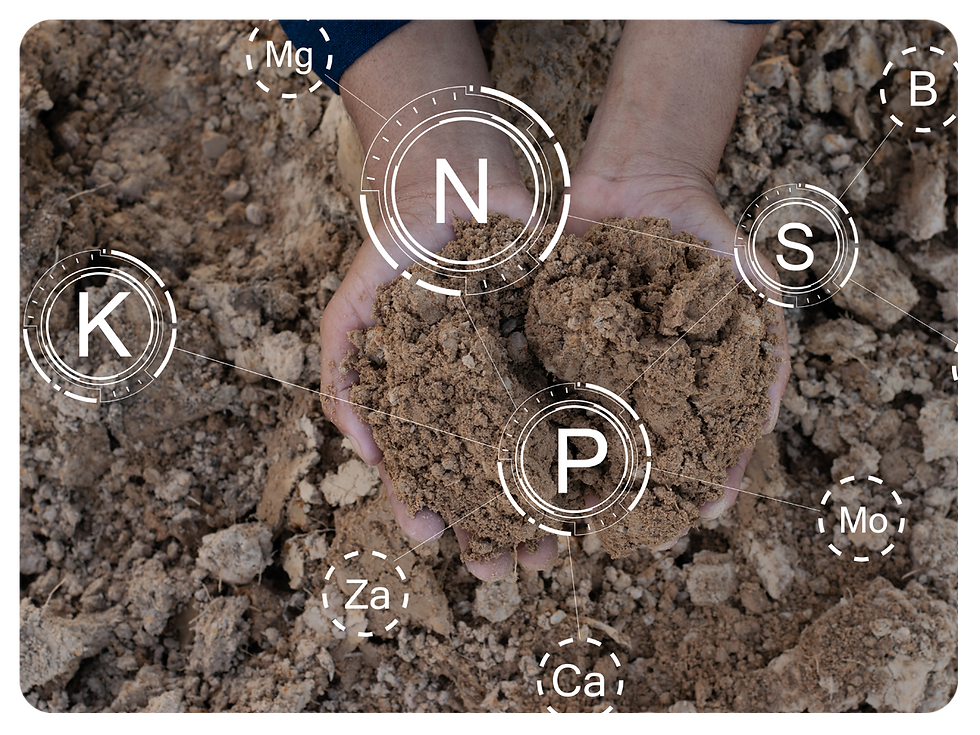
Too early spring fertilization can be wasteful
Overwintered cereals develop a secondary root system and complete the tillering phase, which determines the number of grains each productive stem— the ear—can hold.
In the spring, as soon as the weather warms up, many farms are eager to begin fertilizing plants with nitrogen fertilizers. However, Arūnas Jusas, Sales Director at Nando, warns against rushing:"At low soil temperatures, the secondary root system of cereals develops slowly, and without it, nutrient uptake by plants is impossible."
He also notes that after winter, the soil often contains a lot of moisture, so fertilizing too early with nitrogen fertilizers can be inefficient:"In many cases, the soil after winter has high moisture content, so applying nitrogen fertilizers too early can result in losses of up to 80%."
Jusas emphasizes that applying large doses of fertilizers at once is ineffective because the soil cannot retain excessive amounts of nutrients. He recommends fertilizing in smaller doses only when the soil warms up and the development of secondary roots has begun:"We should not fertilize too early. Fertilize when the soil warms up and secondary root development is triggered. Particularly during the first nitrogen application, use smaller doses—up to 70 kg of active substance per hectare," advises the expert.
The importance of the flag leaf stage
Another critical phase is the flag leaf stage. Before the flag leaf appears and the plant reaches its peak photosynthesis, farmers still have the opportunity to assess yield potential and weather conditions and, if necessary, supplement the plants with additional nitrogen fertilizers.
"Maximum efficiency is achieved when nutrients are delivered to plants gradually, rather than in one or two doses, as this allows us to reach optimal utility. Otherwise, fertilization efficiency drops significantly," Jusas explains.
The role of micronutrients and properly selected biotechnological products
Once the key fertilization tasks are done, attention must be paid to other details. Spraying with micronutrients is also crucial for plant growth processes. Each incomplete stage of plant nutrition becomes a limiting factor for achieving a high and quality yield.
"Let’s not forget that while we aim to nourish our crops optimally, weather conditions do not always allow us to do so. For this reason, Nando’s surfactants can help achieve optimal results even under unfavorable conditions. One example is spraying plants with boron combined with plant protection products. This process is logical and saves the farmer’s time and costs. However, depending on the boron raw material and its concentration in the solution, this element can weaken the effectiveness of plant protection products. As a result, we may lose a critical moment and reduce yield potential. To avoid such situations, where an effective plant protection product stops working, it is essential to use water softening and pH correction products," Jusas emphasizes.
Another example is the penetration and retention of the spray solution on the plant. Water is the primary carrier for farm solutions. Unfortunately, water has the highest surface tension among all liquids, which significantly reduces spray solution efficiency. This can be avoided by using Nando-produced adjuvants—spreaders, stickers, and drift-reducing products. These ensure the spray solution reaches plants, spreads quickly, and penetrates the plant effectively, even on windy days.
Conclusion
As we see, crop cultivation is a highly complex task, so it is crucial to eliminate as many limiting factors as possible. By doing so, we can achieve a bountiful and high-quality harvest.
