



The importance of nitrogen for plants
Nitrogen is one of the primary nutrients for plant nutrition, essential for their growth, development, and reproduction. It is a vital component of proteins and nucleic acids, which form the basis of life. Nitrogen plays a crucial role in chlorophyll synthesis, which is necessary for photosynthesis, and it is one of the most important growth-promoting substances. It also contributes to the formation of amino acids, the building blocks of proteins. Without nitrogen, plants cannot produce the proteins, hormones, and enzymes required for their growth and development.
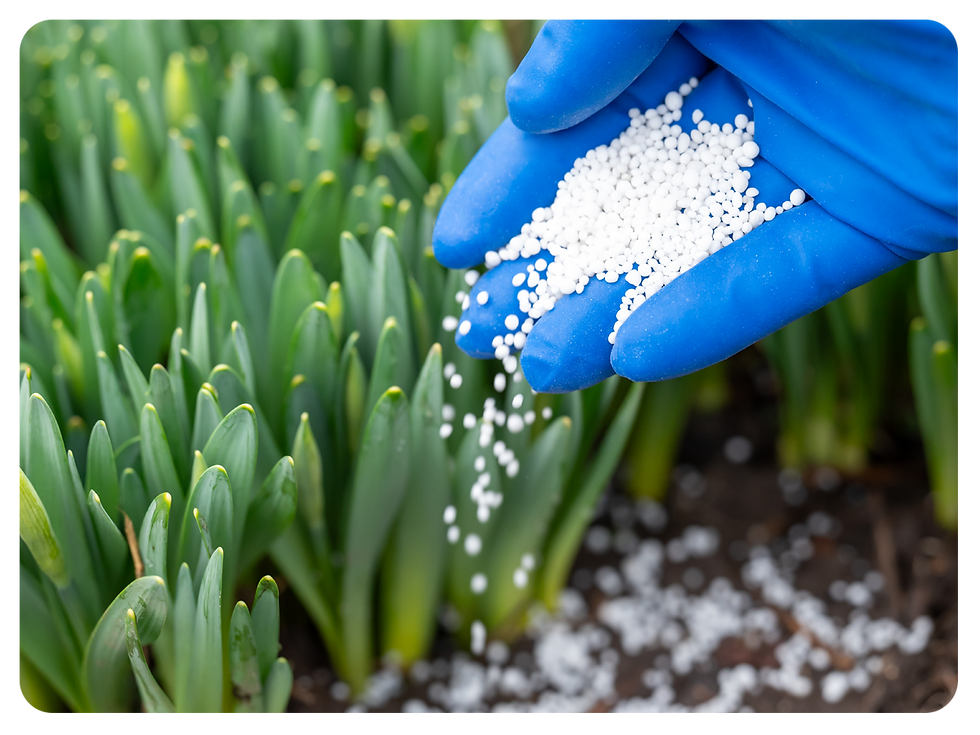
In the atmosphere, nitrogen constitutes 75.6% of the total mass, making it one of the most abundant biogenic elements. In soil organic matter, nitrogen is introduced through microorganisms and plants that absorb it from the atmosphere.
Natural ecosystems can fully meet their nitrogen needs biologically, but in agricultural systems, the nitrogen accumulated in plants is removed with the harvest.
The role of nitrogen in plants
Nitrogen stimulates and regulates numerous growth and development processes in plants. In cases of nitrogen deficiency, plants grow more slowly, chlorophyll levels decrease, leaves become small and pale green, and eventually turn yellow. As described by Gliessman (2000), nitrogen cycles within the ecosystem in various forms. In nature, nitrogen primarily exists in the atmosphere as gaseous N₂, which plants cannot directly absorb despite its abundance of about 88,000 tons per hectare.
In ecosystems, nitrogen is found in inorganic forms, such as NO₃⁻ and NH₄⁺, or as organic compounds bonded with carbon, such as amidic (C-NH₂) or amide (C-N-C) forms. For plants, nitrogen is most accessible in its inorganic forms present in the soil.
Nitrogen introduction
Nitrogen is converted into forms accessible to plants through natural atmospheric conditions, industrial processes, and biological fixation. Atmospheric nitrogen (N₂) is gaseous and not directly available to plants under normal atmospheric conditions. Before plants can absorb nitrogen, it must be transformed into nitrates (NO₃⁻) or ammonia (NH₄⁺).
Part of atmospheric nitrogen is converted into usable forms when lightning breaks the strong bonds in N₂ gas molecules. The resulting nitrogen oxides can combine with hydrogen from atmospheric moisture and reach the soil as ammonia (NH₄⁺) through precipitation.
Nitrogen can also be processed industrially. In this process, gaseous nitrogen molecules are destabilized by heating air to high temperatures under high pressure and introducing hydrogen (usually derived from natural gas or methane). This forms ammonia (NH₃), which is a key component of inorganic nitrogen fertilizers. However, because this process is energy-intensive (usually relying on fossil fuels), inorganic nitrogen fertilizers are relatively expensive.
Additionally, gaseous nitrogen can be converted into plant-accessible forms by rhizobia bacteria living in symbiosis with legumes. Rhizobia use enzymatic processes to break the N₂ bond. Other microorganisms can also convert N₂ into NO₃⁻ either in symbiosis (e.g., Frankia, Anabaena) or while living freely (e.g., Azotobacter, various actinomycetes).
Organic nitrogen compounds from manure and plant residues are naturally mineralized into forms accessible to plants. Other soil microorganisms oxidize ammonium (NH₄⁺) into nitrates (NO₃⁻) through a two-step process called nitrification. Nitrogen is also introduced with organic fertilizers like livestock manure, compost, and green manure.
Inorganic nitrogen fertilizers come in liquid, granulated, and slow-release forms. Ammonium-based fertilizers delay leaching because NH₄⁺ is retained in the soil’s exchange complex. Once NH₄⁺ is converted to NO₃⁻, nitrogen is more prone to leaching.
Nitrogen losses
Nitrogen is lost from fields through harvest and nitrate ion leaching due to heavy rainfall or excessive irrigation. Many soils have a limited capacity to retain negatively charged nitrate ions. If plants do not absorb NO₃⁻, these ions may leach below the root zone and contaminate groundwater. To prevent groundwater pollution, it is crucial to carefully plan irrigation and nitrogen fertilization, determining appropriate amounts and timing. Monitoring crop water balance can help conserve irrigation water and fertilizers while protecting the environment.
Nitrogen can also be lost to the atmosphere through volatilization. Under alkaline soil conditions, ammonia can escape from the soil surface. In anaerobic conditions, denitrification occurs, where soil bacteria reduce NO₃⁻ to N₂ and nitrous oxide (N₂O) gases, which are released into the atmosphere.
Nitrogen fertilizers typically increase crop yields. To balance crop yields and reduce environmental pollution, particularly for improving water and soil quality, it is essential to effectively monitor biological nitrogen fixation and the state of chemical fertilizers. Nitrogen fertilizers play a crucial role in maintaining high grain yields and are a cornerstone of agricultural production.
Nitrogen fixation
Atmospheric nitrogen fixation by microorganisms occurs through a process called biological nitrogen fixation. This dynamic process requires significant energy as microorganisms convert nitrogen compounds into organic materials that plants can absorb. Bacteria such as Azotobacter, Rhizobium, Blue-Green Algae (BGA), Azospirillum, and Azolla are central to this process. These bacteria fix nitrogen into plant-accessible forms and are often used in biological fertilizers.
Legumes have root nodules that host rhizobia bacteria from genera like Sinorhizobium, Azorhizobium, Rhizobium, Bradyrhizobium, and Mesorhizobium. Rhizobial inoculants can increase legume yields by up to 15–20 kg N/ha, enhancing crop productivity by up to 20%.
Azotobacter bacteria are vital in the nitrogen cycle and exhibit diverse metabolic capabilities. Beyond nitrogen fixation, Azotobacter produces vitamins like riboflavin and thiamine, as well as plant hormones like indole acetic acid (IAA), cytokinins (CK), and gibberellins (GA). Azotobacter chroococcum fixes atmospheric nitrogen and supplies it to plants, improving root architecture and seed germination. These bacteria also combat pathogenic microorganisms around plant roots.
Azospirillum, another aerobic free-living bacterium, supports various aspects of plant growth and development. Field trials and experiments with Azospirillum species like A. irakense, A. lipoferum, A. halopraeferens, A. amazonense, and A. brasilense have demonstrated enhanced crop yields and growth. Plants inoculated with Azospirillum exhibit improved water and mineral absorption, resulting in higher yields. Studies by Hungria et al. (2010) show that Azospirillum brasilense effectively promotes plant growth through nitrogen fixation, reducing fertilizer costs.
Conclusions
Nitrogen is a critical plant nutrient essential for growth, development, and reproduction. Through natural and artificial processes, nitrogen is transformed into plant-accessible forms, necessary for the synthesis of proteins, nucleic acids, and chlorophyll. However, nitrogen deficiencies and excesses can negatively impact the environment and plant health.
Effective nitrogen management in agriculture requires careful planning and monitoring. Biological nitrogen fixation by microorganisms like Azotobacter and Rhizobium offers a sustainable and environmentally friendly way to enhance plant nutrition. These microorganisms not only fix nitrogen but also improve plant health and yield.
Balancing crop yields and minimizing environmental pollution requires efficient nitrogen fertilizer use and promoting biological nitrogen fixation. Future agricultural practices should focus more on sustainable solutions that increase yields while protecting the environment and improving soil health. Microbial fertilizers and nitrogen fixation by microorganisms play a vital role in sustainable farming.
